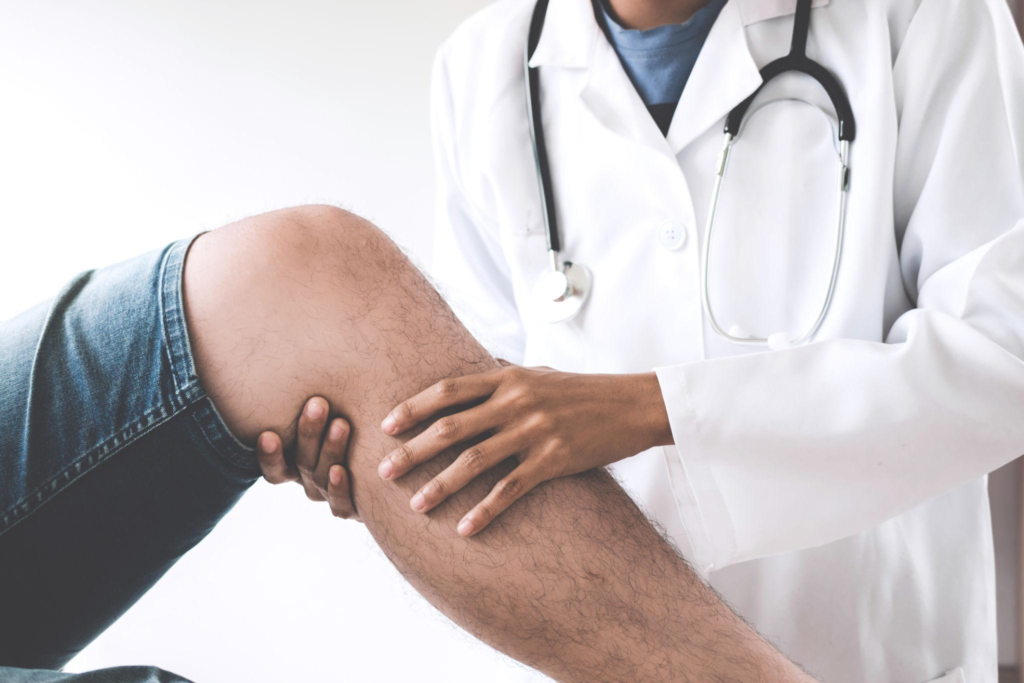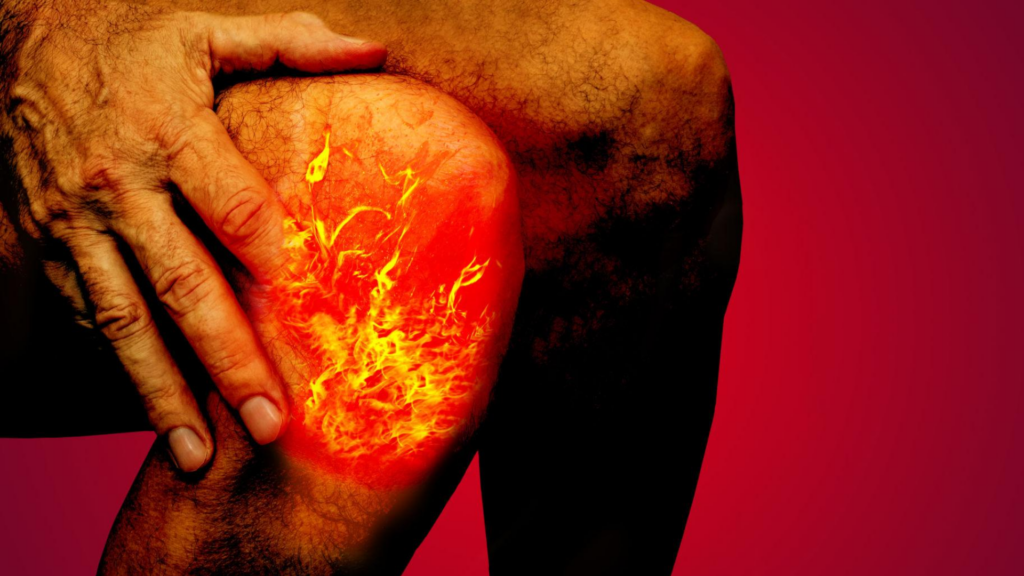
Many people notice knee pain or stiffness after sitting for long periods, especially when standing up, walking, or straightening the leg again. Some people experience mild discomfort, while others feel sharp pain, tightness, or stiffness that improves only after moving around.
This problem is extremely common and may affect:
- office workers
- drivers
- older adults
- people with arthritis
- individuals with reduced mobility
In many cases, knee pain after sitting develops because the joint becomes stiff and surrounding tissues tighten during inactivity. The good news is that many cases improve with movement, stretching, strengthening, and better mobility habits.

Why Sitting Causes Knee Pain
When the knee remains bent for long periods:
- circulation may decrease slightly
- muscles may tighten
- joint stiffness may increase
- pressure may build around the kneecap
Standing up suddenly after inactivity may temporarily increase discomfort until the joint begins moving normally again.
Read also: Why Does My Knee Give Out?
Arthritis and Joint Stiffness
One of the most common causes of knee pain after sitting is arthritis-related stiffness.
People with arthritis often notice:
- stiffness after inactivity
- aching pain when standing up
- reduced flexibility
- discomfort during the first few steps
Movement often helps loosen the joint gradually.
Kneecap Irritation
Pressure around the kneecap may increase while sitting with bent knees for extended periods.
This may contribute to:
- aching near the front of the knee
- stiffness
- discomfort while standing up
- pain during stairs or squatting
Symptoms are often worse after long sitting sessions.
Muscle Tightness
Tight surrounding muscles may increase stress on the knee joint.
Common problem areas include:
- quadriceps
- hamstrings
- calves
- hips
Reduced flexibility may affect movement quality and increase discomfort after inactivity.
Weakness and Reduced Mobility
Weak muscles surrounding the knee may provide less support during movement.
This may increase stress during:
- standing up
- walking
- stair climbing
- exercise
Reduced mobility often worsens stiffness over time.
Common Symptoms
People with knee pain after sitting often experience:
- stiffness when standing up
- aching pain
- discomfort during the first steps
- tightness around the knee
- reduced flexibility
- pain after long sitting periods
Symptoms often improve slightly after movement.
Long Sitting Periods Make It Worse
Certain situations commonly aggravate symptoms.
Examples include:
- long office work sessions
- driving for extended periods
- watching television for hours
- traveling
- prolonged inactivity
The longer the knee stays inactive, the stiffer it may feel afterward.
Why Do My Knees Get Stiff After Sitting?
Many people notice that their knees feel stiff after sitting for long periods. This happens because inactivity allows the joint fluid to become less evenly distributed and the surrounding muscles and tendons to tighten.
Common causes include:
- arthritis
- tendon irritation
- muscle tightness
- prolonged sitting
- reduced flexibility
The stiffness usually improves once you start moving again.
Read also: Can Knee Pain Be Arthritis?
Knee Pain When Standing Up
Pain that occurs when standing up after sitting is extremely common and often results from temporary stiffness in the joint.
Possible causes include:
- osteoarthritis
- patellofemoral pain syndrome
- tendon irritation
- muscle weakness
- tight quadriceps muscles
Symptoms may include:
- sharp pain when rising
- stiffness during the first few steps
- discomfort that improves with movement
- aching around the kneecap
| Symptom | Possible Cause |
|---|---|
| Pain during first steps | Arthritis |
| Sharp pain near the kneecap | Patellofemoral pain syndrome |
| Tight feeling | Muscle stiffness |
| Pain after prolonged sitting | Tendon irritation |
Read also: Pain Above the Kneecap: Causes and Relief
Knee Pain After Sitting Too Long
Sitting for long periods can place the knees in a fixed position, leading to stiffness and discomfort.
People commonly experience:
- aching knees
- reduced flexibility
- pain during the first few steps
- a feeling that the knees need to “loosen up”
Contributing factors include:
- desk work
- long car rides
- airplane travel
- poor posture
- arthritis
Simple strategies that may help include:
- standing up every 30 to 60 minutes
- stretching regularly
- maintaining a healthy weight
- strengthening the leg muscles
Read also: Walking for Knee Pain: Benefits and Risks
Knee Pain After Sitting With Bent Legs
Keeping the knees bent for long periods may increase pressure around the kneecap and surrounding tissues.
Common situations include:
- sitting cross-legged
- driving
- long meetings
- watching television
- airplane travel
People with patellofemoral pain syndrome and arthritis often notice symptoms worsen in these positions.
| Sitting Position | Effect on Knee Pain |
|---|---|
| Sitting with knees bent for long periods | May increase pain |
| Cross-legged sitting | May aggravate symptoms |
| Frequent position changes | Often helpful |
| Short walks every hour | Usually beneficial |
Changing positions regularly and stretching throughout the day may help reduce discomfort.
Gentle Movement Helps
One of the simplest ways to reduce stiffness is moving regularly throughout the day.
Helpful habits include:
- standing up frequently
- short walks
- gentle stretching
- light mobility exercises
- avoiding prolonged inactivity
Regular movement may help improve circulation and reduce stiffness.
Read also: What Is the Fastest Way to Relieve Knee Pain at Home?
Stretching and Mobility Work
Stretching may help reduce tension surrounding the knee.
Helpful areas to stretch include:
- quadriceps
- hamstrings
- calves
- hips
Mobility work may improve:
- flexibility
- movement quality
- overall knee comfort
Read also: Best Stretches for Stiff Knees
Strengthening Exercises
Weak muscles may increase pressure on the knee joint during movement.
Helpful strengthening exercises may include:
- leg raises
- glute bridges
- step-ups
- controlled squats
- balance exercises
Improving strength may help reduce stiffness and support better knee function.
Read also:
• How to Strengthen Weak Knees
Can Heat Help?
Some people benefit from heat therapy before movement.
Heat may help:
- reduce stiffness
- relax surrounding muscles
- improve flexibility
Warm showers or heating pads are commonly used before activity.
Read also: Ice vs Heat for Knee Pain: What Works Best?
Common Mistakes People Make
Many people unintentionally worsen symptoms by:
- remaining seated too long
- avoiding movement completely
- skipping mobility exercises
- ignoring muscle tightness
- increasing activity too aggressively after inactivity
Small movement breaks throughout the day often help significantly.
When Should You See a Doctor?
You should consider medical evaluation if:
- swelling becomes severe
- pain worsens significantly
- walking becomes difficult
- the knee feels unstable
- symptoms continue for several weeks
Persistent symptoms may indicate arthritis or other joint-related problems.
Read also: When Should You See a Doctor for Knee Pain?
Frequently Asked Questions
Why do my knees get stiff after sitting?
Stiff knees after sitting are commonly caused by arthritis, muscle tightness, tendon irritation, or prolonged inactivity.
Why does my knee hurt when I stand up after sitting?
Pain when standing up is often related to temporary stiffness, arthritis, or patellofemoral pain syndrome.
Is it normal for knees to hurt after sitting too long?
Yes. Many people experience discomfort after prolonged sitting, especially older adults and those with arthritis.
Why do bent knees make my pain worse?
Keeping the knees bent for extended periods increases pressure on the joint and may aggravate inflammation and stiffness.
Can walking help knee pain after sitting?
Yes. Gentle movement and short walks often help improve circulation, reduce stiffness, and restore mobility.
Final Thoughts
Knee pain after sitting is commonly linked to stiffness, arthritis, muscle tightness, reduced mobility, and prolonged inactivity. While symptoms can become frustrating, many cases improve with regular movement, stretching, strengthening, and mobility work.
Reducing long sitting periods and improving overall knee movement often helps support long-term comfort and mobility.