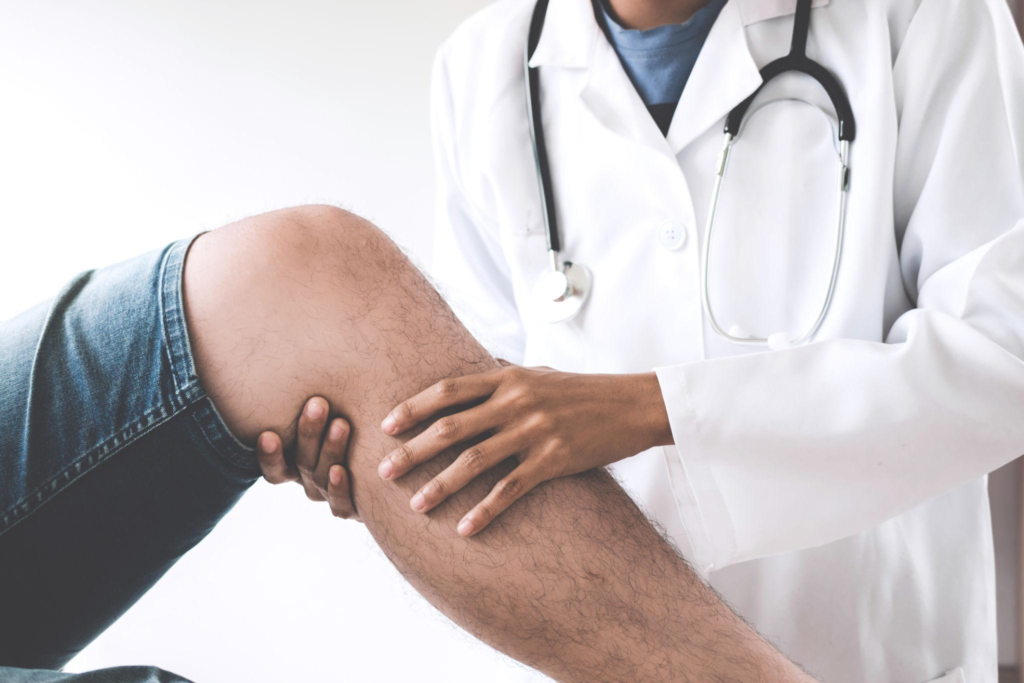
A knee that suddenly gives out can be alarming. Some people describe the sensation as the knee buckling, collapsing, shifting unexpectedly, or feeling unable to support body weight during walking or movement.
In some cases, the knee gives out only occasionally. In others, instability becomes frequent and begins interfering with daily activities, exercise, and confidence during movement.
The good news is that knee instability is often linked to identifiable causes such as muscle weakness, ligament problems, arthritis, or joint irritation. Understanding the possible reasons behind this symptom can help you take the right steps toward recovery.

What Does It Mean When a Knee Gives Out?
When a knee gives out, it usually means the joint temporarily loses stability during movement.
People often describe it as:
- sudden weakness
- buckling while walking
- feeling that the knee may collapse
- loss of confidence during movement
- difficulty supporting body weight
The sensation may occur during walking, stairs, exercise, or even simple daily activities.
Muscle Weakness
One of the most common causes of knee instability is weakness in the muscles that support the joint.
Important muscle groups include:
- quadriceps
- hamstrings
- glutes
- calves
When these muscles are weak, the knee may struggle to maintain proper stability during movement.
Ligament Problems
Ligaments help keep the knee stable during activity.
Irritation or injury involving knee ligaments may contribute to:
- instability
- buckling
- weakness during movement
- reduced confidence while walking
Previous sports injuries may increase the likelihood of ongoing instability.
Arthritis and Joint Wear
Arthritis may sometimes cause the knee to feel unstable.
Common symptoms include:
- stiffness
- swelling
- aching pain
- weakness during movement
Joint wear may affect how smoothly the knee functions and supports body weight.
Pain Can Cause the Knee to Give Out
In some cases, instability is not caused by structural damage but by pain itself.
When pain occurs suddenly, surrounding muscles may react by reducing force output temporarily.
This may create the sensation that the knee:
- buckled
- weakened suddenly
- could not support weight properly
Swelling and Inflammation
Swelling inside the knee may interfere with normal joint function.
Inflammation may contribute to:
- weakness
- stiffness
- instability
- reduced range of motion
People often notice worsening symptoms during flare-ups.
Common Symptoms
People whose knee gives out often experience:
- instability while walking
- weakness during stairs
- buckling sensations
- stiffness
- swelling
- reduced confidence during movement
Symptoms may occur occasionally or become more frequent over time.
Activities That Often Trigger Instability
Certain activities may increase the likelihood of knee buckling.
Common examples include:
- walking downhill
- going down stairs
- running
- sudden direction changes
- uneven surfaces
These activities place additional demands on knee stability.
Strengthening Exercises May Help
For many people, strengthening surrounding muscles is one of the most effective ways to improve stability.
Helpful exercises may include:
- straight leg raises
- glute bridges
- step-ups
- balance exercises
- controlled squats
Improving strength may help reduce excessive stress on the knee joint.
Read also: How to Strengthen Weak Knees
Balance and Stability Training
Balance exercises may improve coordination and joint control.
Helpful examples include:
- standing on one leg
- controlled balance holds
- slow side stepping
- stability exercises
Improved balance often helps support confidence during movement.
Can a Knee Brace Help?
Some people benefit from:
- compression sleeves
- supportive knee braces
- hinged braces for instability
These products may help:
- improve support
- reduce discomfort
- increase confidence while walking
Read also: Best Knee Braces for Support and Pain Relief
When Is a Giving-Out Knee Serious?
Certain symptoms may indicate a more significant problem.
Warning signs include:
- severe swelling
- inability to bear weight
- repeated instability episodes
- severe pain
- locking sensations
- worsening symptoms over time
These situations may require medical evaluation.
Read also: Signs Your Knee Pain Is Serious
Common Mistakes People Make
Many people unintentionally worsen instability by:
- ignoring weakness
- avoiding exercise completely
- continuing high-impact activity despite symptoms
- delaying treatment
- skipping strengthening work
Addressing weakness early often improves recovery outcomes.
When Should You See a Doctor?
You should consider medical evaluation if:
- the knee gives out repeatedly
- walking becomes difficult
- swelling becomes severe
- pain worsens significantly
- instability affects daily activities
Persistent instability should not be ignored because it may increase the risk of falls and further injury.
Final Thoughts
A knee that gives out is often linked to muscle weakness, arthritis, ligament problems, swelling, or instability within the joint. While occasional episodes may improve with strengthening and mobility work, repeated buckling should be taken seriously.
Improving strength, stability, and movement quality often helps restore confidence and support long-term knee health.