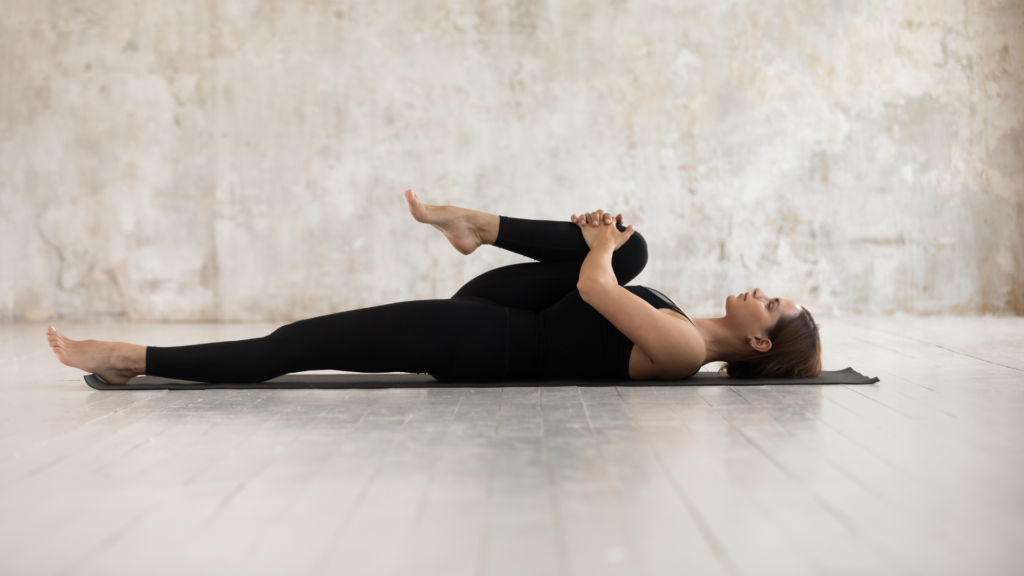
The right exercises can reduce knee pain, improve stability, and help prevent future problems.
The wrong exercises can make pain worse.
That’s why choosing safe, low-impact movements is so important, especially if your knees already feel stiff, weak, or inflamed.
This guide covers some of the best exercises for knee pain that are commonly recommended by physical therapists and mobility specialists.
Why Exercise Helps Knee Pain
Many people think rest is the solution.
Short-term rest can help during flare-ups, but long-term inactivity often makes knee pain worse.
Proper movement helps:
- strengthen muscles around the knee
- improve stability
- increase mobility
- reduce stiffness
- support joint function
The goal is controlled movement, not pushing through pain.
Before You Start
A few important rules:
- stop if pain becomes sharp
- move slowly and with control
- prioritize consistency over intensity
- avoid high-impact movements initially
If your knee is swollen or very inflamed, start with:
- cold therapy
- elevation
- light mobility only
You can also read:
Read also: What Is the Fastest Way to Relieve Knee Pain at Home?
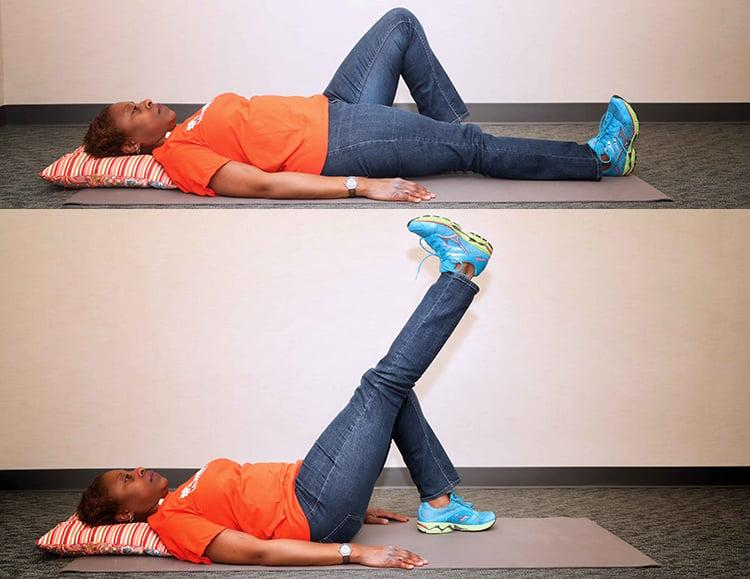
1. Straight Leg Raises
Why it helps
This exercise strengthens the quadriceps without placing excessive pressure on the knee joint.
How to do it
- Lie flat on your back
- Keep one leg bent
- Keep the other leg straight
- Raise the straight leg slowly
- Hold briefly at the top
- Lower slowly
Recommended
- 10 to 15 repetitions
- 2 to 3 sets
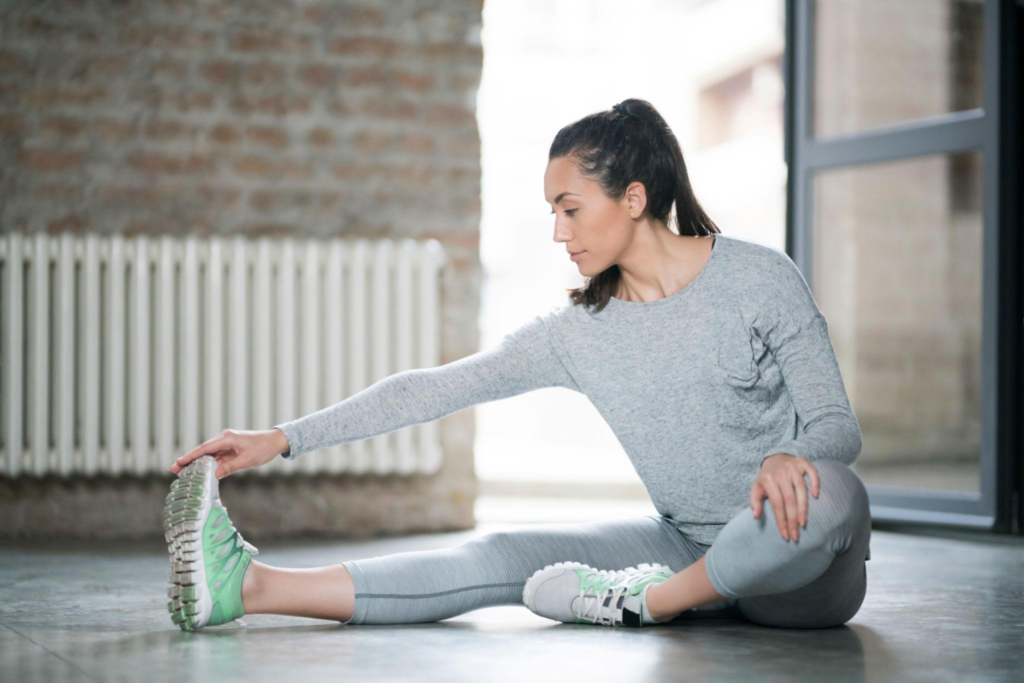
2. Hamstring Stretches
Why it helps
Tight hamstrings can increase stress on the knees.
Improving flexibility often reduces discomfort significantly.
How to do it
- Sit with one leg extended
- Lean forward gently
- Keep your back straight
- Hold the stretch without bouncing
Recommended
- Hold for 20 to 30 seconds
- Repeat 3 times per leg
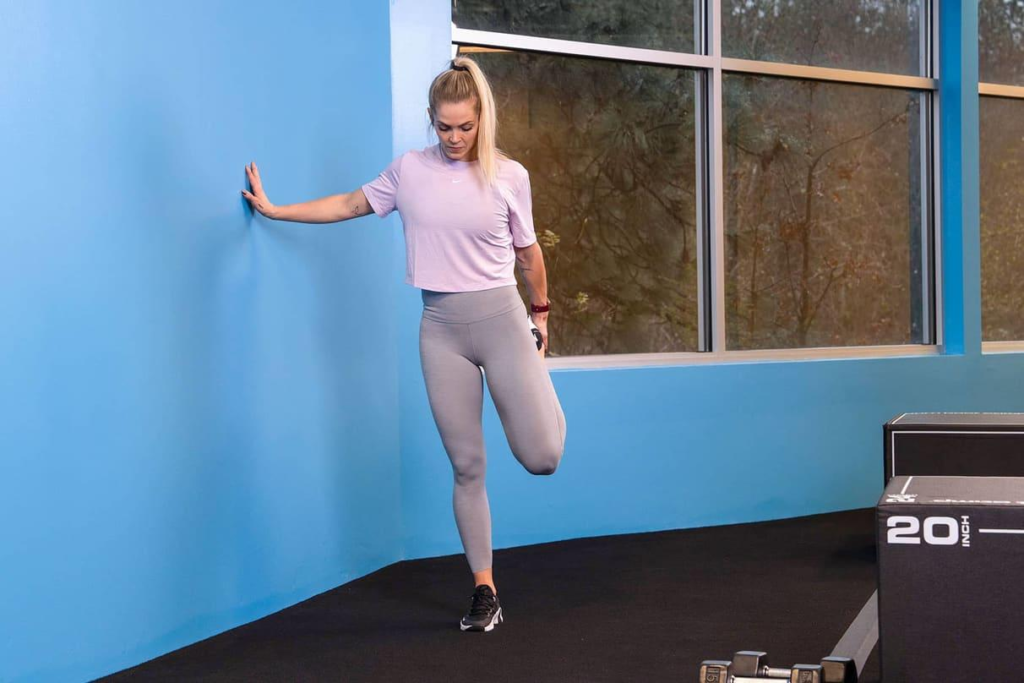
3. Quad Stretches
Why it helps
Tight quadriceps can pull on the kneecap and increase pain.
How to do it
- Stand while holding support if needed
- Pull one foot toward your glutes
- Keep knees close together
- Hold gently without forcing range of motion
Recommended
- Hold for 20 to 30 seconds
- Repeat 2 to 3 times
4. Glute Bridges
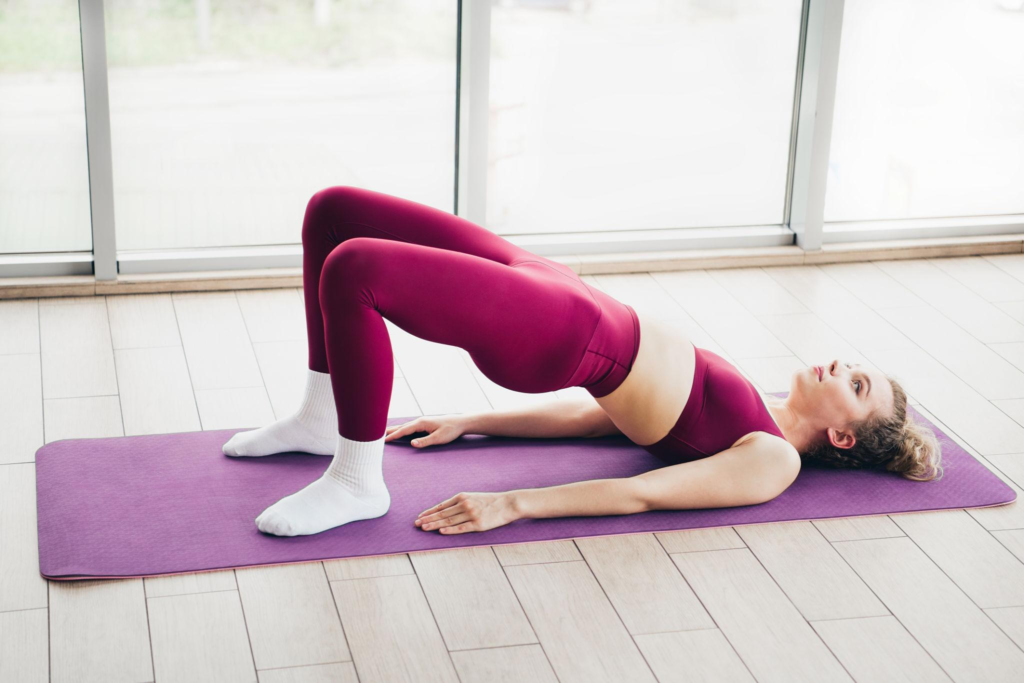
Why it helps
Weak glutes can contribute to poor knee alignment and instability.
How to do it
- Lie on your back
- Bend both knees
- Push through your heels
- Lift hips upward slowly
- Pause briefly at the top
- Lower with control
Recommended
- 10 to 15 repetitions
- 2 to 3 sets
5. Seated Knee Extensions
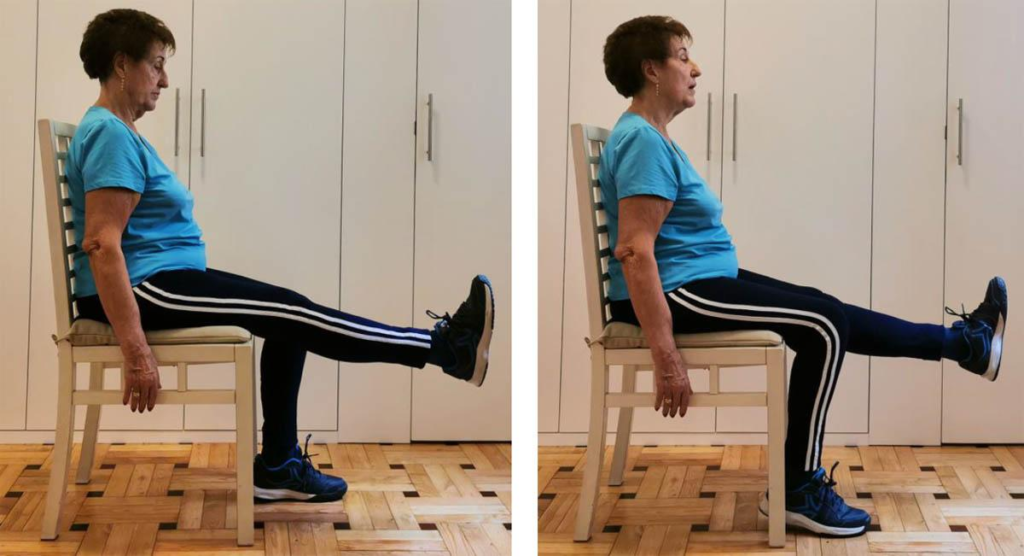
Why it helps
This movement strengthens the front thigh muscles while remaining low impact.
How to do it
- Sit on a chair
- Slowly extend one leg
- Hold briefly
- Lower slowly
Recommended
- 10 to 15 repetitions per leg
- 2 sets
6. Calf Raises
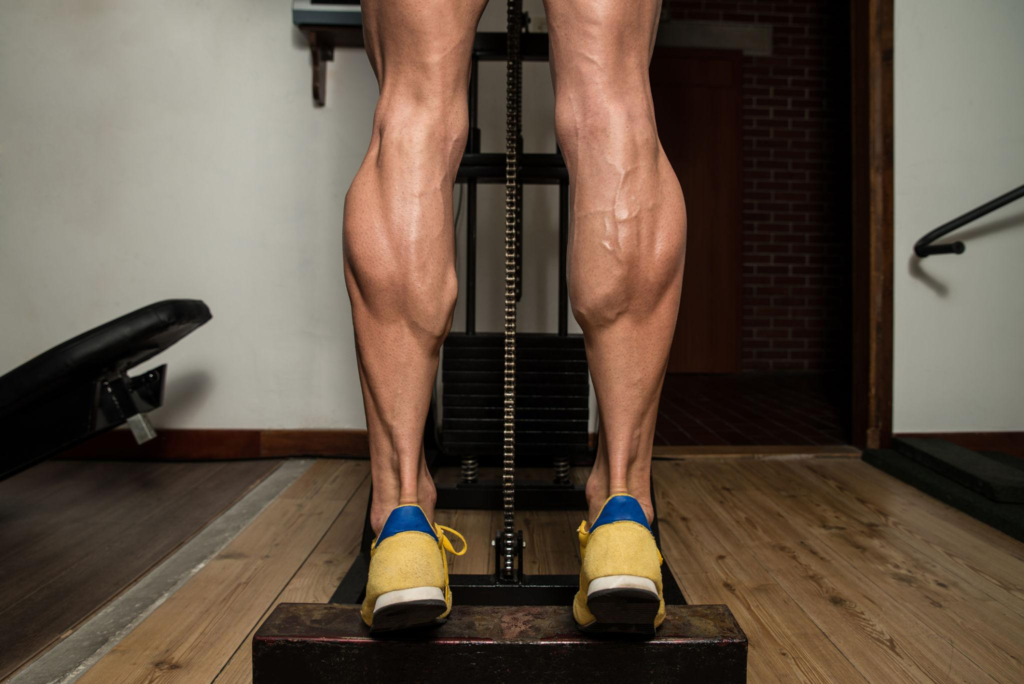
Why it helps
Strong calves help support lower-body stability and movement mechanics.
How to do it
- Stand near a wall or chair
- Raise heels slowly
- Pause at the top
- Lower under control
Recommended
- 12 to 15 repetitions
- 2 to 3 sets
Exercises to Avoid Initially
Some movements place excessive stress on painful knees.
Temporarily avoid:
- deep squats
- jumping exercises
- sprinting
- high-impact sports
- sudden twisting movements
As strength improves, many people can gradually return to these activities.
How Often Should You Exercise?
For most people:
- 3 to 5 times per week works well
- consistency matters more than intensity
- improvement usually takes several weeks
Trying to progress too aggressively often delays recovery.
Also read: Best Knee Braces for Support and Pain Relief
Should You Use Heat or Ice After Exercise?
It depends on your symptoms.
Use ice if:
- swelling increases
- the knee feels inflamed
- pain becomes sharp
Use heat if:
- stiffness is the main issue
- muscles feel tight
- there is no swelling
Common Mistakes People Make
Many people unknowingly slow progress by:
- exercising through sharp pain
- skipping warm-ups
- doing too much too soon
- ignoring mobility work
- focusing only on the knee itself
Remember: Sometimes weak hips, glutes, or tight hamstrings are the real problem.
Read also: Knee Pain at Night: Causes and Simple Fixes
When to Stop and Seek Medical Advice
Stop exercising and seek professional help if:
- pain worsens significantly
- the knee locks or gives out
- swelling becomes severe
- you cannot bear weight properly
Read next:
Read also: When Should You See a Doctor for Knee Pain?
Final Thoughts
The best exercises for knee pain are usually the simplest ones.
Focus on:
- controlled movement
- flexibility
- gradual strengthening
- consistency
Over time, small improvements in strength and mobility can dramatically reduce knee discomfort and improve daily movement.